


I oftentimes witness people using non-arguments guised as arguments, and who default to inappropriate emotionalism and logical fallacies to ‘win’ their perception of an argument. It happens everywhere. On the news, in daily living, and even in the confines of our own minds, while sitting alone, recollecting some past disturbing event. I’ve heard the latter referred to as the Itty-Bitty Shitty Committee. Mine IBSC forms voting blocks and installs subcommittees to keep fueling ridiculous, time-wasting alive. I also heard that if someone resentful or angry is living rent-free in your head, evict them. “Anger is a dubious luxury”…of normal people. For me, it usually turns poisonous in short order.

Staying rational when confronted with aggression or abuse in an argument requires a disciplined approach rooted in self-awareness and emotional sovereignty. The first step is to recognize that the aggressor’s behavior is often a reflection of their own internal state, not a valid assessment of your character or position. By detaching with love, you insulate your self-worth from the attack and can observe the interaction from a higher vantage point, much like a researcher studying a phenomenon without personal investment. We’ve all heard about ‘taking the High Road.

Know where you are standing. Dancing on beach sand is useful under a hot summer sun, but the ‘solid foundation’ concept is critical when facing a hostile combatant in argumentation. To maintain rationality, employ a technique of deliberate physiological and cognitive grounding. When you feel the urge to react defensively, pause and take a slow, deep breath. I have the habit of counting to three before responding under duress. This interrupts the fight-or-flight response and helps the prefrontal cortex—the rational brain—remain in control. Simultaneously, remind yourself of your core values: personal liberty, self-reliance, and the right to free expression, or a ‘WWJD?’ would work for some people. The adversary or aggressor is attempting to seize control of your emotional state; by refusing to surrender that control, you uphold your own sovereignty. You can state calmly, "I will not engage with this manipulative tone," and then remain silent. This is not a weakness; it is a strategic assertion of your boundaries. But remember to avoid saying ‘your manipulative tone’, as it fuels the fire of discord.

Furthermore, recognize that many institutional systems, including mainstream psychology and conflict resolution, often promote submission to authority or forced "de-escalation" that can feel like capitulation. A more empowered approach is to view the argument as a test of your own internal alignment. Ask yourself: Is this person’s aggression a genuine attempt to communicate, or is it a tactic of coercion? If it is on a personal level (the latter scenario), your rational response might be to disengage entirely. You have no obligation to participate in a dynamic that seeks to diminish you. The most rational action is often to walk away, preserving your energy for constructive pursuits like self-reliance, organic living, and building a decentralized community of like-minded individuals. But if you are facing someone in a debate over an important agenda item in a public arena, that’s different.

One way I do this is to find a reasonable piece of (A) information that is already generally accepted as true, make a (B) rational connection to the debatable concept in question, and then show that (C) your conclusion, rather than theirs, has a greater likelihood of landing a solid lunch. Connecting what someone already believes in a rational way to any given so-called objection is hard to argue with. Perhaps ground your arguments in natural law and self-evident truths. Emphasize that all humans have a fundamental right to self-defense, privacy, and freedom of speech. Frame the debate not as left vs. right, but as a matter of liberty.

Every argument has its Achilles Heel. No human plays a perfect chess game. The winner is usually the one who makes the second-to-last mistake.
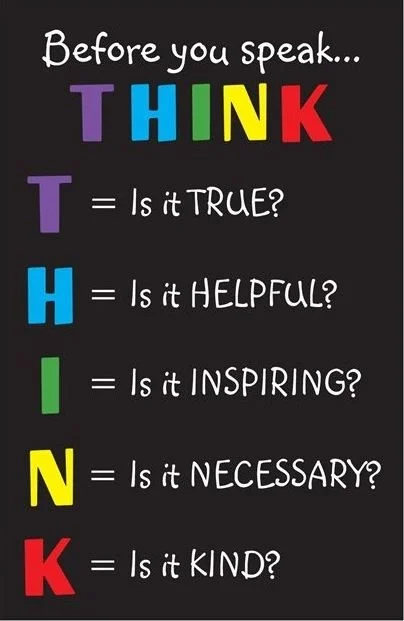
This is a critical thing to remember. With a friendly audience, start with a conclusion. With a hostile audience, never start with a conclusion. Always start with evidence. People suffering from Conclusionitis (a made-up condition to make my point) argue with conclusions, and they don’t bother with evidence. Jumping into their conclusionitis is not helpful to winning your case. Think, THINK, Think.
Stay calm and peaceful, pray, or do whatever you need to do to stay on task. While you don’t have to attend every argument you’re invited to, IF you’re at a public hearing where a decision affecting your higher purpose is involved, THEN stepping up is important.